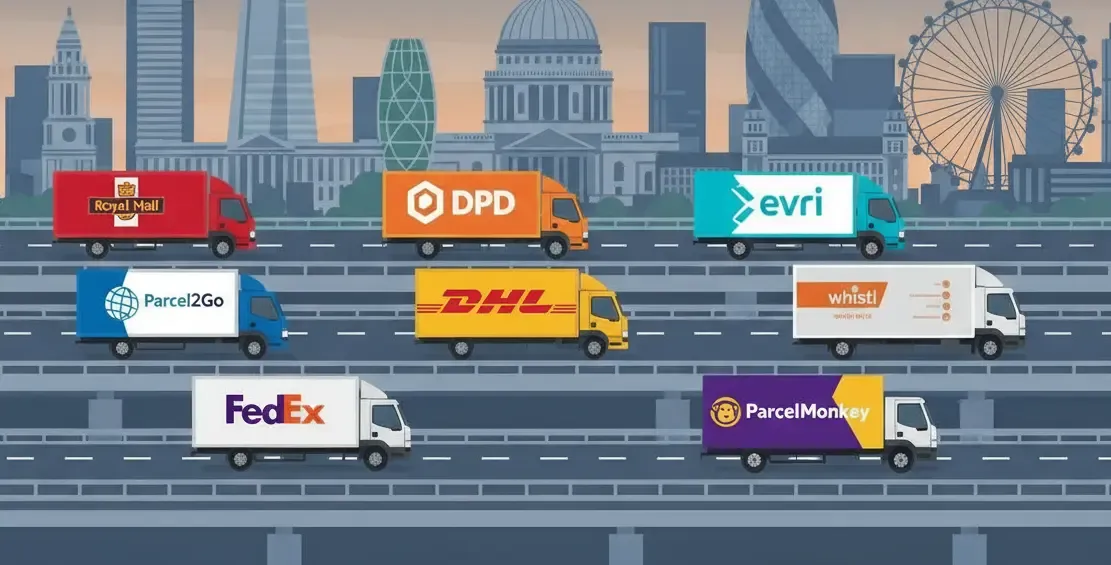


How to choose the right carrier for your business
Author: Prolisto Team · Last updated: · 3 min read

Postage is one of the few costs you pay on every single order, and the carrier you pick decides whether parcels arrive on time. Late or lost parcels turn into "item not received" cases, refunds and negative feedback. Choosing the right carrier, or the right mix of carriers, keeps both the cost and the complaints down.
This guide covers what to compare, when one carrier is enough, when it isn't, and how to run several without slowing down dispatch.
What to compare between carriers
Before you sign up with anyone, pull a month of your own orders and look at what you actually send: how many large letters, small parcels and heavy items, and where they go. Then compare carriers on these four points.
- Cost for your parcels. Headline prices matter less than the price for your most common size and weight. Ask about business rates once your volume is steady.
- Speed. Match the service to what you promise on the listing. Marketplaces measure late delivery, and missing your stated handling and delivery times hurts your seller rating.
- Coverage. Check the countries you sell to, and what the carrier needs for customs on international parcels.
- Tracking. Tracked services protect you in "item not received" disputes, and marketplaces expect tracking numbers on most orders.
When one carrier isn't enough
A single carrier is simpler, and for a small range of similar items it can be the right choice. It stops working when your parcels vary. The service that's cheapest for a paperback is rarely the cheapest for a 15 kg box, and the best carrier for UK next-day delivery may not be the best for Germany or the US.
With two or three carriers you can:
- Send each parcel the cheapest suitable way. Large letters, small parcels and heavy items each go with the carrier that prices them best.
- Offer delivery choices. Some buyers pay for speed; others want the cheapest option.
- Ship abroad more reliably. Carriers are strong in different regions.
- Keep sending if one carrier has problems. Strikes, depot delays and price rises affect one carrier at a time.
The catch is the extra work. If someone has to decide the service for every order and copy addresses into several courier websites, the savings disappear into staff time and mistakes.
How to run several carriers without extra work
The answer is to make the carrier choice automatic and print every label from one place. This is how it works in Prolisto's multi-carrier order fulfilment.
Carriers, direct or by file upload
Prolisto connects directly to Royal Mail (Click & Drop and the ProShipping API), Whistl, DHL, Deutsche Post and Amazon Easy Ship. For these, labels print in batches and tracking numbers come back automatically. Other carriers work through a CSV file upload: FedEx, for example, is tested and works well this way. To add tracking for those orders, you import the carrier's shipment manifest and Prolisto attaches each tracking number to the right order. How carriers connect.
Courier rules choose the service
Courier rules pick the carrier and service for each order based on size (large letter or parcel), weight, marketplace, order value and destination postcode. Your dispatch team doesn't have to decide parcel by parcel.
Weighing and average weight billing
Weights can be typed in or read straight from a compatible Dymo USB postal scale, and the label can be created as soon as the weight is in. Some carriers also offer average weight billing, where you're charged an agreed average weight per parcel instead of each parcel's exact weight, which makes postage costs steadier. Prolisto supports it with those carriers. Weighing and average weight.
International parcels
Customs details are included for both direct and CSV carriers, so international orders don't need a separate process.
Orders from every channel in one list
Orders download from eBay, Amazon, Discogs, WooCommerce and ShopBlocks into one list. When an order is dispatched, it's marked as sent with tracking on its marketplace and the items come off your stock, so the stock levels on your other channels stay right too. How stock stays in sync.
A simple way to start
- List your parcel types and destinations from last month's orders.
- Get prices from two or three carriers for those exact parcels.
- Pick one main carrier and add a second only where it clearly wins, for example heavy items or one country.
- Set courier rules so the choice happens automatically, then review your postage costs after a month.
If you'd like to see how this works with your carriers, book a demo and we'll show it with your own order types.
Run your eBay and Amazon business in one place
Start free trialBy Prolisto Team · Last updated 19 October 2026
The Prolisto team builds listing, pricing, inventory and fulfilment tools for eBay, Amazon and WooCommerce sellers, and writes about what works on the marketplaces.